All hospital visitors are recommended to wear a medical face mask. Expand this message for information about visiting hospital.
Last updated: 13 March 2023
Some visitor restrictions for all Te Whatu OraWaitaha Canterbury hospitals and health facilities remain in place, but we have relaxed others.
There is still a heightened risk to vulnerable people in hospital and so we recommend all people wear a mask when visiting any of our facilities and follow other advice designed to keep patients, staff and visitors safe.
To keep everybody safe:
Visitors or support people must not visit our facilities if they are unwell. Do not visit if you have recently tested positive for COVID-19 and haven’t completed your isolation period.
Patients may have more than one visitor, except in some situations such as multi-bed rooms where it can cause overcrowding.
Surgical/medical masks are recommended to be worn at all sites. Masks will be provided if you don’t have one.
For Specialist Mental Health Services everyone is strongly encouraged to wear a face mask in all inpatient areas and areas where consumers are receiving care (i.e. community appointments, home-visits, transporting people). Discretion may be applied in cases where masks impair your ability to communicate effectively.
Visitors must not eat or drink in multibed rooms because of the increased risk when multiple people remove their face mask in the same space.
Hand sanitiser is available and must be used.
Thank you in advance for your patience and understanding as our staff work hard to protect and care for some of the most vulnerable in our community.
Visiting patients with COVID-19
People can visit patients who have COVID-19 but they must wear an N95 mask – this will be provided if you don’t have one.
Other methods of communication will be facilitated e.g. phone, Facetime, Zoom, WhatsApp etc where visits aren’t possible.
All visitors are recommended to wear a medical face mask.
Parents/caregivers are able to be with their child in hospital and visitors are now allowed, except for the Children’s Haematology and Oncology Day stay where just one parent/caregiver is able to attend their appointment with their child. Exceptions by special arrangement only.
Getting immunised is the best thing you can do to keep yourself, your whānau and your community safe from serious, infectious diseases.
Are you aged 15-30 years?
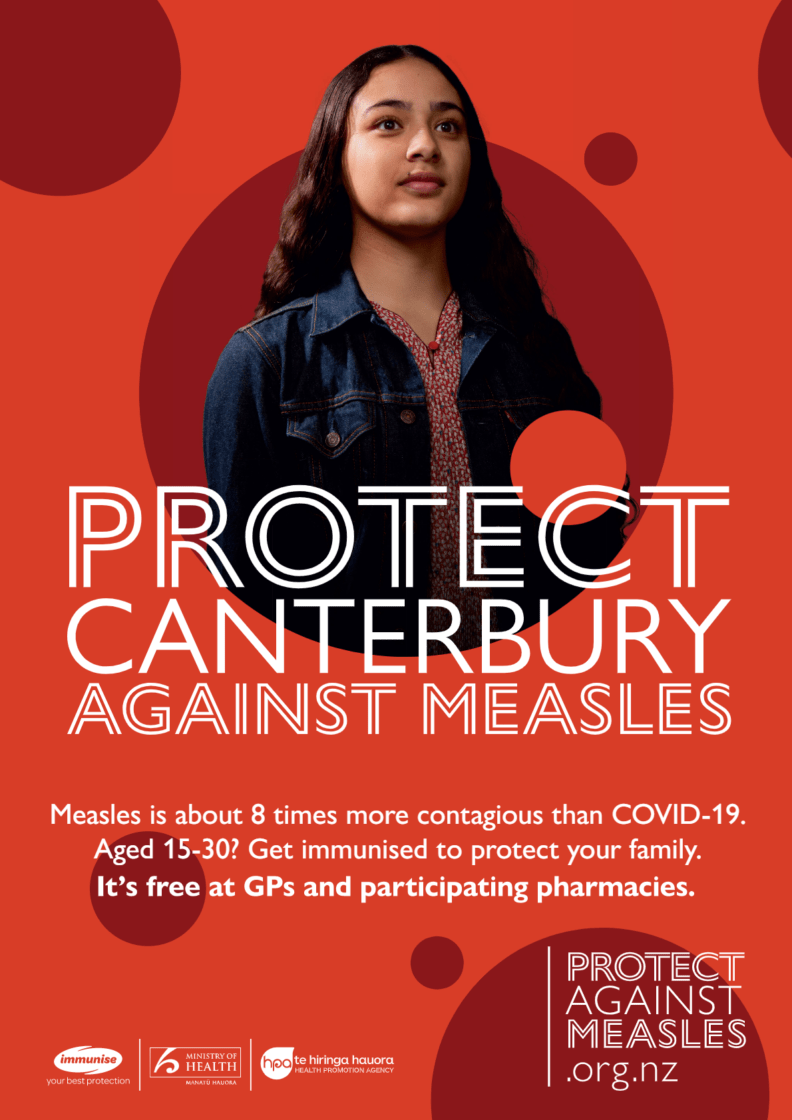
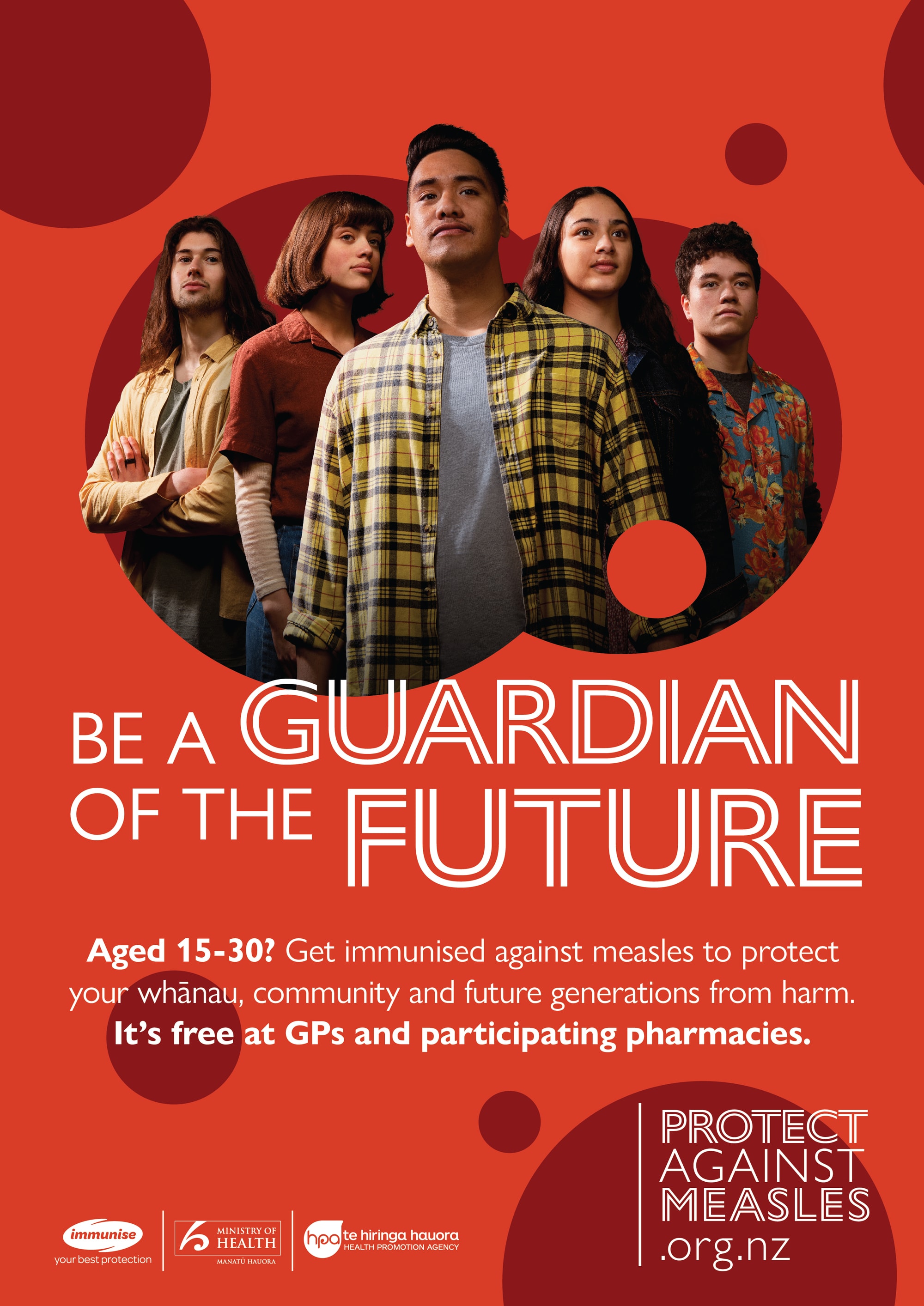
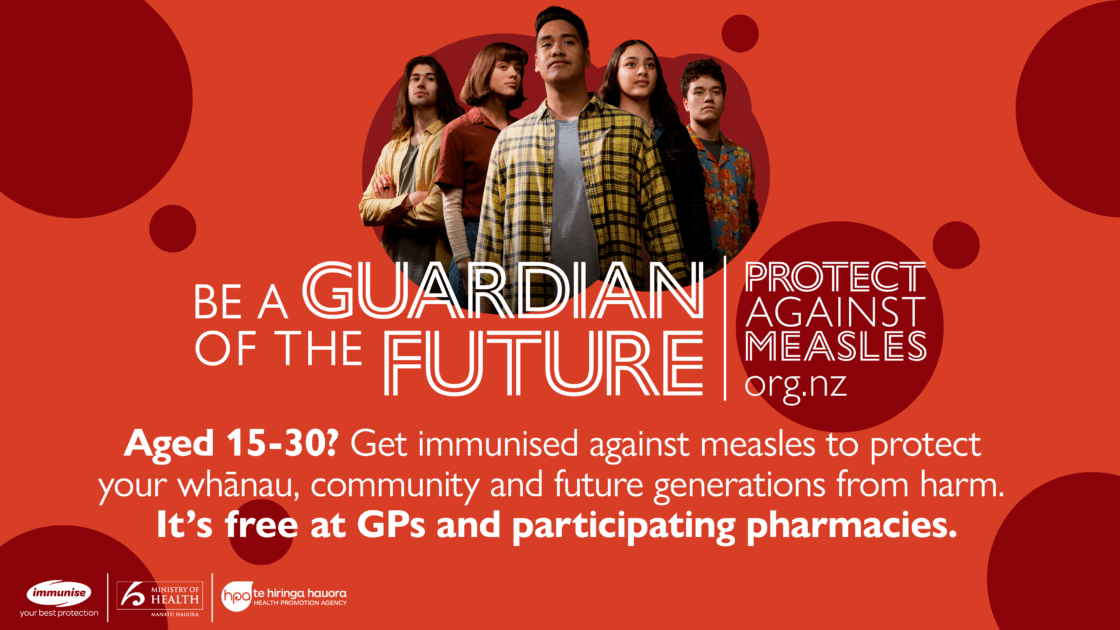
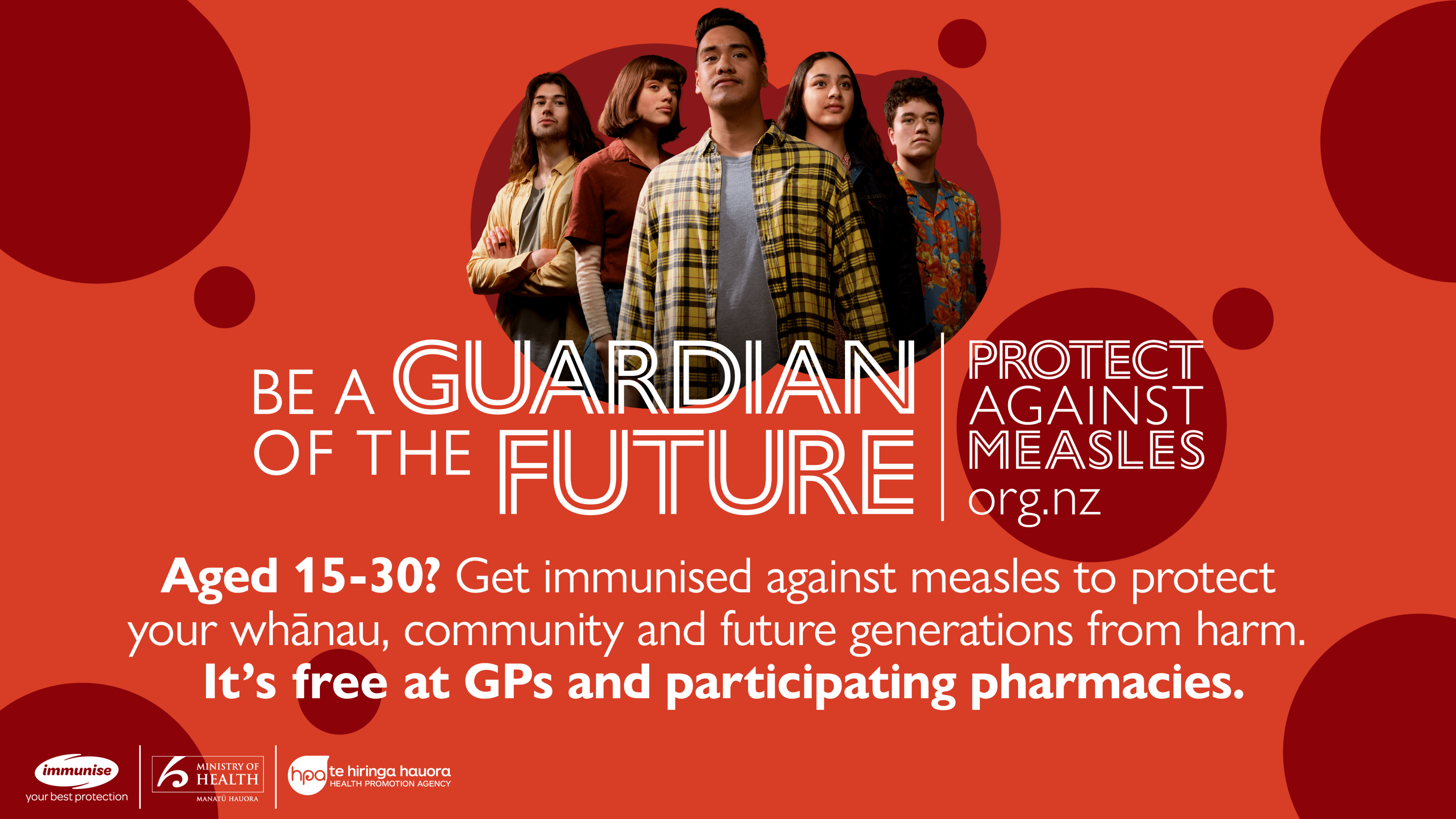
Become a Guardian of the Future by getting immunised against measles. Not only will you be protecting yourself against a disease that’s much more contagious than COVID-19, you’ll also be protecting your whānau, your community, and future generations from harm.
Measles is a serious disease that can make you very sick. Lots of people aged between 15 and 30 years didn’t get fully immunised when they were children. This means they have a higher risk of catching and spreading measles.
It’s easy and free to get your measles immunisation now.
Protect the people you care about. Immunise to help stop the spread of measles.
Not sure if you’re immunised against measles? Ask your doctor, parent or caregiver if you had two doses of the measles, mumps and rubella (MMR) vaccine as a child.
Some other countries only immunise against measles and rubella. So, even if you were immunised against measles overseas, make sure you get your free MMR in New Zealand so that you’re protected from mumps too.
You can ask your GP for a measles immunisation. It’s free. Your GP may also call you or your parent/caregiver to offer an appointment.
If you’re 16 or older, you can get a free MMR immunisation at participating pharmacies. You don’t need an appointment, you can just turn up. The pharmacist will take you to a private space in the pharmacy to do this.
A health professional may offer you a free measles immunisation when you’re at a community event, or at school or work.
You will be asked to wait for 20 minutes afterwards to monitor for any adverse reaction
This map shows you the participating pharmacies in Canterbury where you can go to get your free MMR immunisation:
If you have trouble seeing the pharmacies map above, or you would like to see a larger version of the map, you can also view it on Google Maps
There are good reasons to get immunised:
You could get very sick if you get measles: You can have complications like pneumonia, seizures and swelling of the brain. People can die from measles.
You might make others very sick if you get measles: Some people can’t have the MMR vaccine because they’re very young or have a disease that affects their immune system. Being immunised, means you won’t catch measles and spread it to vulnerable people.
If you get measles when you’re pregnant*, it could affect your baby: You may go into labour early or your baby may have a low birth-weight. This can have life-long impacts on your baby’s health. * You can’t have the MMR vaccine when you’re pregnant.
You could miss out on earning, learning or having fun: If you haven’t had the MMR vaccine and are in the same room as someone with measles, you will have to isolate for up to two weeks. This is to make sure you don’t have measles and can’t pass it on to others.
We recently had a measles outbreak: In New Zealand, more than 2,000 people got measles in 2019. 700 had to go to hospital. Māori and Pacific peoples were particularly affected. We need 95 percent of people to be immune to reach ‘community immunity’ (sometimes known as ‘herd immunity’) and help stop future outbreaks.
Measles is only a plane ride away: Measles is still common in many countries. People can bring it into New Zealand without knowing. You could also be exposed if you travel to certain countries overseas.
The HealthInfo website has good information about these serious diseases:
The measles immunisation is called MMR and protects you against three serious diseases: measles, mumps and rubella.
In New Zealand, children are given their first dose at 12 months and their second dose at 15 months.
The MMR vaccine works by helping your body to make antibodies that fight measles.
MMR is given as an injection in your arm. When you’ve had the MMR vaccine, your immune system will recognise and fight the measles virus if you come into contact with it for real.
This protects you – and those around you – from getting sick or spreading measles.
The MMR vaccine is made of small amounts of weakened forms of the measles, mumps and rubella germs. These trigger your immune system to make antibodies to fight the germs.
The vaccine has a few other ingredients to keep it stable and ready to go. These ingredients are in tiny amounts and also found in common foods and drinks.
All vaccines approved for use in New Zealand have a good safety record and have ongoing safety monitoring. Go to the Ministry of Health's webpage about vaccine safety and vaccine ingredients to help you make an informed decision about immunisation.
The MMR vaccine has an excellent safety record. MMR vaccines have been used in New Zealand since 1990.
The MMR vaccine very effective. After one dose, about 95 percent of people are protected from measles and after two doses, more than 99 percent of people are protected.
A small number of people who are fully immunised may still get sick. But they usually get a milder illness than people who haven’t been immunised.
Fewer than one in 10 people may get a mild response between five and 12 days after immunisation, like a mild fever, a rash or swollen glands. Other mild reactions that can happen (usually within one or two days of being immunised) include:
headache
a slight fever (feeling hot)
nausea (feeling sick)
fainting or feeling faint (eating beforehand helps with this)
generally feeling a bit unwell.
The chance of having a serious side-effect from the MMR vaccine is extremely rare and would happen within 20 minutes of being immunised. That’s why you’ll be asked to stay for 20 minutes after you have the MMR vaccine. If a severe allergic reaction does happen, the vaccinator can effectively treat it.
Your doctor, nurse or pharmacist will talk about possible reactions with you at the time.
Immunisation is your choice. The Immunisation Advisory Centre (University of Auckland) has a lot of good information sources to help you make an informed decision about immunisation. Visit the Immunisation Advisory Centre's website.
You are eligible for free MMR immunisation if you meet any of these criteria:
you were born after 1 January 1969 and are eligible to receive funded healthcare in New Zealand and you have not previously received two doses of MMR vaccine
you are aged under 18 regardless of your immigration status
you are a Recognised Seasonal Employers Scheme worker

 Getting immunised is the best thing you can do to keep yourself, your